

When a patient graduates from your program, one of two things happens: Either they leave with a lasting connection to your community, or they slowly lose touch with the structure and support that helped them build recovery in the first place. Custom mobile apps for behavioral health help treatment centers maintain that connection long after formal treatment ends by keeping recovery tools, communication, and community support accessible in daily life.
The difference often comes down to whether your program provides a tool that continues reinforcing identity, accountability, and engagement outside the walls of treatment. That’s where recovery support software custom branding becomes especially valuable.
In this article, you’ll learn how such apps strengthen alumni engagement, why branded recovery tools improve long-term connection, and how treatment centers use custom platforms to support recovery beyond discharge.
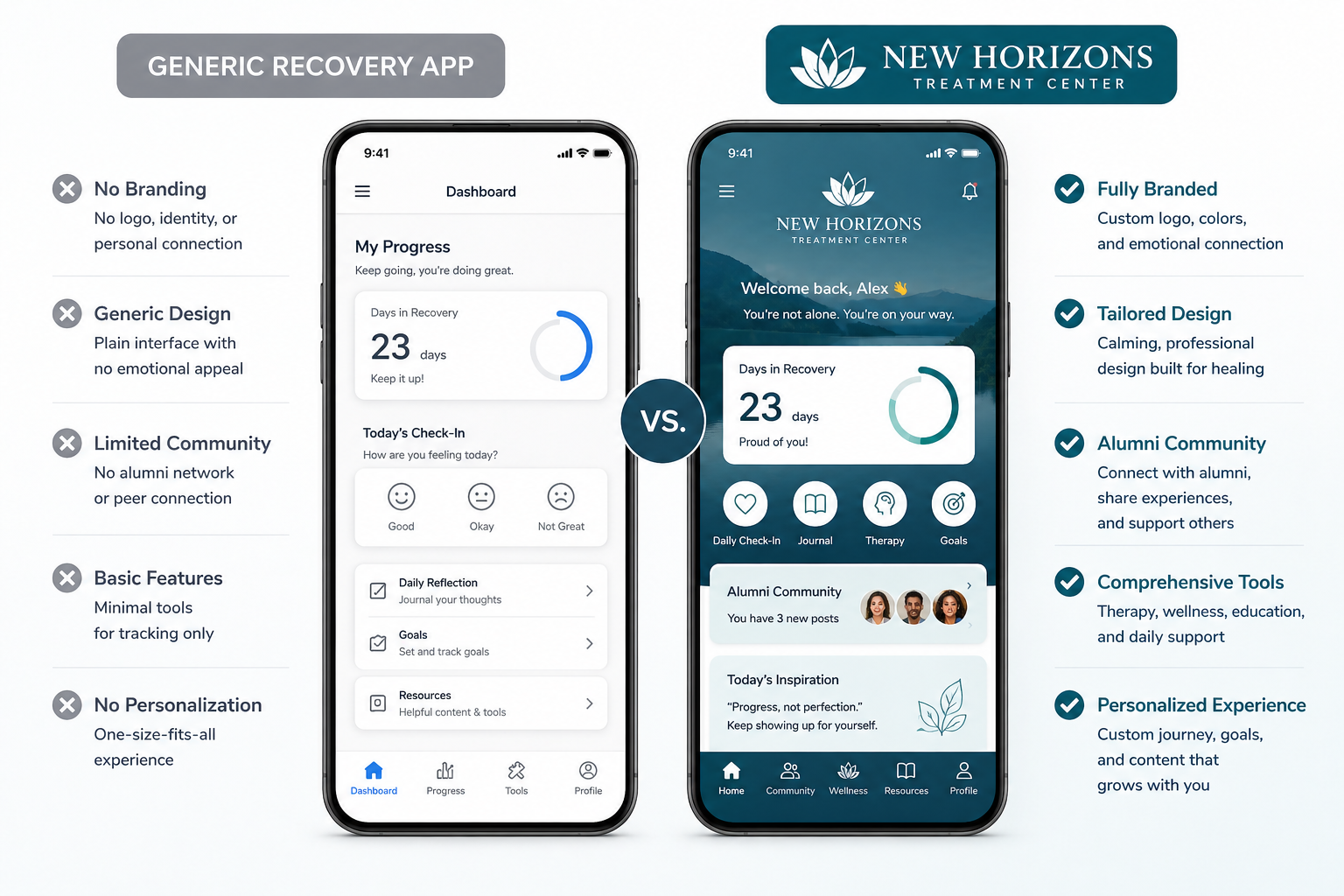
Why Generic Apps Fail to Build Loyalty
Many treatment centers point their alumni toward generic recovery apps. These tools are not bad. But they are not yours. When an alumnus opens a generic app every day, they are reinforcing a connection to a third-party brand, not to the program that changed their life.
A white-label recovery app treatment centers changes that dynamic entirely. Every time your alumni open the app, they see your logo, your colors, your messaging. The app becomes a daily reminder of their community and the care that supported their recovery. That is brand equity you cannot buy through advertising.
Beyond branding, custom apps allow you to control the experience. You decide what features your alumni see, what content they receive, and how your team communicates with them. Generic platforms make those decisions for you.
What White-Label Branding Actually Includes
When treatment centers hear white label, they sometimes assume it means a basic logo swap. Real white-label behavioral health app development goes much deeper than that.
Custom mobile apps for behavioral health usually include the following:
- Custom name and icon: Your app appears in the App Store and Google Play under your treatment center's name and branding.
- Visual design alignment: Colors, typography, imagery, and tone all match your existing brand identity
- Custom onboarding flow: New alumni see a welcome experience that reflects your program's values and culture
- Tailored content and resources: Your specific curriculum, tools, and recovery philosophy built into the app
- Branded push notifications: Messages that come from your program, not a third-party platform
- Custom community spaces: Alumni forums, groups, and events organized around your program's structure
This level of customization helps transform a simple recovery tool into part of a patient’s daily routine. A branded mobile app rehab programs provide can strengthen long-term engagement by keeping alumni connected to support, resources, and community after treatment ends.
How Branding Drives Alumni Referral Tracking
There is a direct line between brand loyalty and referral behavior. Alumni who feel genuinely connected to your program, who associate their recovery identity with your brand, are significantly more likely to recommend your center to people in their lives who need help.
A strong branded mobile app for rehab makes this organic process measurable. Built-in alumni referral tracking for rehab allows your team to monitor which alumni are referring new patients, what messaging or features are driving that behavior, and how to recognize and reward your most engaged community members.
This data transforms your alumni program from a goodwill initiative into a measurable growth channel. Use our Growth Calculator to see how improved referral rates from a branded alumni app translate into real admissions numbers.
Custom Mobile Apps for Behavioral Health and the Loyalty Loop
Loyalty in recovery is not passive. It has to be earned and maintained through consistent, meaningful engagement. Well-built custom mobile apps for behavioral health
have what we call a loyalty loop:
- Alumni open the app daily because the experience feels personal and rewarding
- Check-ins and milestone tracking give them a reason to keep showing up
- Community features connect them with peers who share their recovery journey
- Push notifications remind them that your program is still present in their life
- Recognition and gamification make their commitment feel visible and valued
Each touchpoint reinforces a patient’s connection to your program and their commitment to recovery. Over time, strong alumni engagement also makes alumni referral tracking rehab programs more effective by creating a more active and connected recovery community.
What to Look for in a Behavioral Health App Development Partner
Not all app development partners understand behavioral health. Look for a team that brings:
- Deep experience in addiction treatment and behavioral health workflows
- HIPAA-compliant infrastructure built into the platform from day one
- A proven launch process that gets your app live without months of delays
- Ongoing support that evolves the app as your program grows
- Transparent pricing that does not penalize you for growing your alumni community
At Team Recovery, we have launched over 110 partner apps and served more than 40,000 patients. Our 23-point proven process covers everything from brand alignment to App Store submission to post-launch alumni strategy.
To see how branded apps have transformed alumni engagement for real treatment centers, visit our case studies page.
Your program deserves an alumni app that carries your name, mission, and recovery community into every graduate’s daily life. Team Recovery builds custom mobile apps for behavioral health programs that are fully white-labeled, HIPAA-compliant, and ready to launch in 90 days or less. Book a demo now.

Henna Geronimo
Reviewer
Henna is a content strategist with over 5 years of experience. She specializes in creating informed, compassionate content for addiction treatment centers, using her deep understanding of the industry to educate, engage, and support individuals seeking recovery.
.webp)
.webp)