
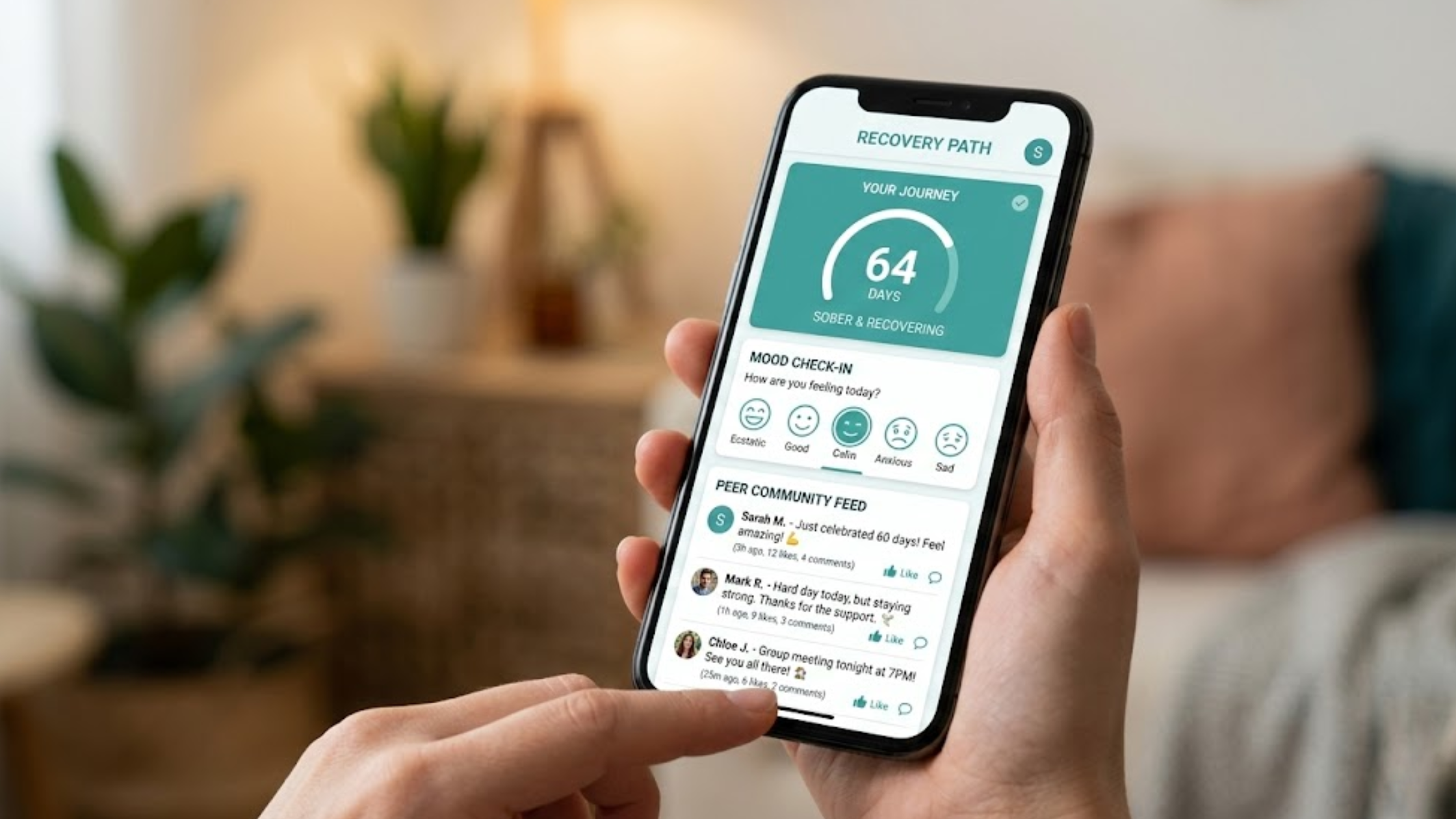
The addiction treatment industry has always been about connection, between clinicians and patients, between programs and alumni, between recovery and real life. What's changing in 2026 is how that connection is being built and maintained.
Mobile technology is no longer a "nice to have" for behavioral health providers. It's becoming the infrastructure of effective aftercare. Treatment centers that understand where addiction recovery app development is heading will be better positioned to serve their alumni, demonstrate outcomes, and grow sustainably.
Here are the trends that matter most, and what they mean for your program.
1. AI Is Entering Addiction Recovery App Development, And It's Changing Everything
Artificial intelligence is no longer a futuristic concept for behavioral health. In 2026, AI in recovery app development is showing up in practical, meaningful ways:
- Predictive risk scoring that flags alumni who may be at elevated relapse risk based on engagement patterns
- Personalized content delivery that surfaces the right resources at the right moment in recovery
- Sentiment analysis in journaling or check-in features that helps staff prioritize outreach
- Chatbot-assisted check-ins that provide 24/7 support between formal sessions
The most important thing to understand is that AI in this context isn't about replacing human care, it's about making human care more targeted and timely. When a clinician gets an alert that an alumnus hasn't engaged in 10 days and their recent mood check-ins trend downward, they can reach out before a crisis, not after.
2. Push Notifications and Retention in Addiction Recovery App Development
One of the highest-ROI features in any recovery app isn't flashy, it's a well-timed push notification. Push notifications and retention in recovery apps are directly correlated. Alumni who receive consistent, personalized outreach are significantly more likely to remain engaged with their program.
In 2026, smart treatment centers are moving beyond generic announcements toward:
- Milestone-triggered messages (30 days, 6 months, 1 year of sobriety)
- Event reminders that drive attendance at alumni meetups and support groups
- Recovery resource nudges based on time of day or self-reported mood
- Re-engagement flows for alumni who have gone quiet
When integrated with your mobile engagement for alumni and patients strategy, these touchpoints become a system, not a series of one-off messages.
3. App Analytics for Rehab Outcomes Are Becoming Non-Negotiable
Behavioral health providers are under increasing pressure to demonstrate outcomes, from insurers, accreditors, and patients themselves. The good news is that modern apps generate the data you need to tell that story.
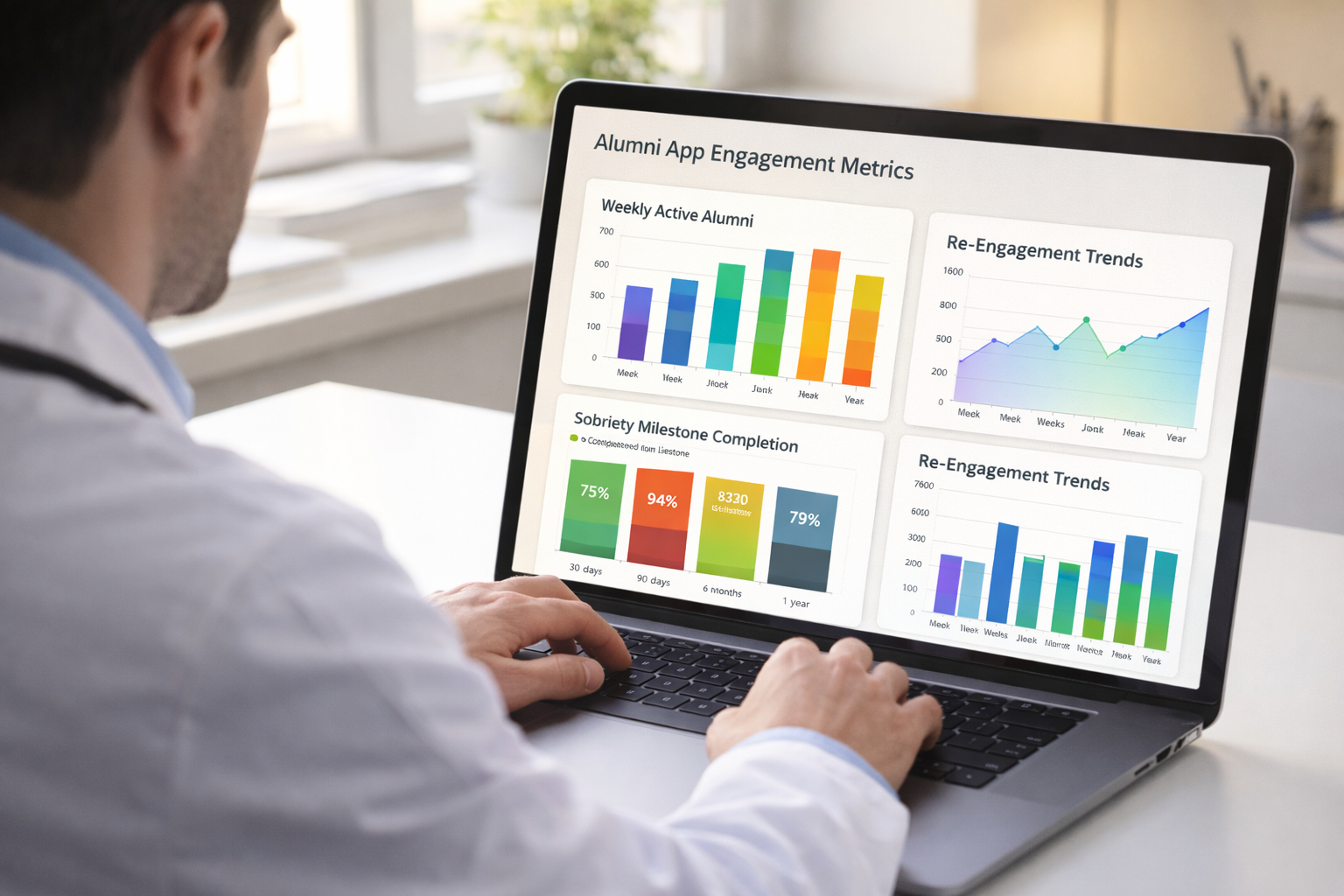
Forward-thinking programs are using app analytics for rehab outcomes to track:
- Daily active users and session frequency among alumni
- Sobriety milestone completion rates
- Correlations between app engagement and 90-day, 6-month, and 12-month outcomes
- Event attendance and community participation trends
This data doesn't just prove your program works, it gives your clinical team actionable intelligence to improve it. Check out the Team Recovery Growth Calculator to see how engagement metrics translate into measurable revenue and admissions impact.
4. Digital Transformation in Recovery Support Apps Is Accelerating
The broader digital transformation in recovery support apps is being driven by a simple reality: alumni engage with tools they actually use in their daily lives. That means apps that feel consumer-grade, not clinical.
The most effective recovery apps in 2026 borrow design principles from social media, fitness, and habit-tracking apps. They're social, gamified where appropriate, visually clean, and deeply personalized. Features like community forums, peer shoutouts for milestones, and progress streaks aren't just engaging, they're therapeutic.
This shift also means that mobile app trends for behavioral health are increasingly focused on accessibility, ensuring apps are usable by alumni of all ages, technical backgrounds, and connectivity situations.
5. White-Labeled Apps Are Replacing Generic Platforms
Treatment centers that hand alumni a generic third-party app miss an opportunity. Your app is a brand touchpoint, a daily reminder of the community and care you provided. White-labeled apps, built to match your logo, colors, and values, create a sense of belonging that generic tools simply can't replicate.
At Team Recovery, every app we build is 100% branded to your program. To see what that looks like in practice, explore our client case studies and see how programs are activating their alumni communities with custom apps.
For a broader perspective on digital health innovation, the National Institute on Drug Abuse (NIDA) regularly publishes research on technology-assisted recovery support that underscores the clinical value of these tools.
If you're still weighing whether to build a custom app or use an off-the-shelf solution, our post on addiction recovery app development for alumni support walks through the key considerations.
Addiction recovery app development is moving fast. Is your treatment center keeping up?
Team Recovery builds white-labeled, HIPAA-compliant mobile apps that activate your alumni community, in 90 days or less. Let's build yours.

Henna Geronimo
Reviewer
Henna is a content strategist with over 5 years of experience. She specializes in creating informed, compassionate content for addiction treatment centers, using her deep understanding of the industry to educate, engage, and support individuals seeking recovery.
.webp)
.webp)