Most behavioral health software fails after the demo, not during it. Every operator has a software graveyard: the EHR module nobody opened after training, the survey tool that sent three emails and stopped, the portal clients never logged into. The contract was signed, and six months later the team had quietly gone back to spreadsheets and group texts.
If you have been burned this way, your skepticism is earned. The usual conclusion, that staff "just won't use new tools," is usually wrong. Staff adoption of behavioral health software is rarely about attitude. It comes down to whether the rollout was designed for the people doing the work.
Why Clinical Teams Resist New Tools
Start with the honest version of the objection. Your counselors, techs and alumni staff are already carrying full caseloads. HRSA's 2025 behavioral health workforce brief names clinician burnout among the factors limiting access to care.
A platform that adds clicks without removing work lands on a team with nothing left to give.
Resistance usually comes from three places: the tool duplicates work already done elsewhere, nobody explained what problem it solves for that specific role, or training happened once and support disappeared. All three are rollout problems, not people problems.
Implementation researchers have studied this for years. The Consolidated Framework for Implementation Research, updated in 2022, organizes the factors that shape whether a new practice takes hold, including the setting it lands in, the people expected to use it, and the process used to roll it out. The update puts more weight on the people receiving the change, which is exactly where most software rollouts fall short.
Step 1: Name One Owner and a Few Champions
A platform without an internal owner becomes nobody's job. Before launch, name one person accountable for adoption. Depending on the use case, that is usually the alumni coordinator, program director or clinical director.
Then pick two or three champions from the floor. HealthIT.gov's guidance on training staff recommends building a group of "super users," staff trained to move through a system quickly who can share tips with colleagues. A peer answering a question in the hallway does more for adoption than another vendor webinar.
Step 2: Map the Workflow Before You Configure Anything
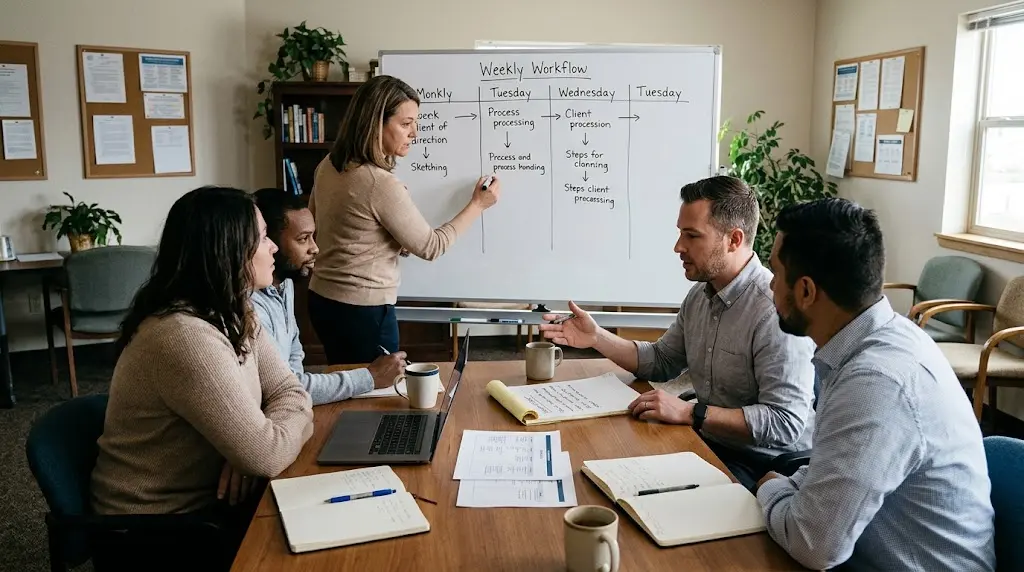
Walk through a normal week with the people who will use the platform. Who sends alumni event reminders today, and where do check-in responses go? Who follows up when a client goes quiet?
Write it down, then decide what the new platform replaces, not just what it adds.
This is where most rollouts quietly fail. If staff are expected to keep the old spreadsheet and also update the new dashboard, the new dashboard loses. Pick a date and retire the old process.
Step 3: Launch One Use Case First
Do not turn on every feature in week one. Start with the use case that has the clearest payoff for staff, such as automated check-ins that replace manual wellness calls, or event reminders that replace a group text. Get that running, show the team the time it saves, then add the next feature.
For a behavioral health app in residential programs, a common starting point is enrolling current clients before discharge. The alumni team then inherits an engaged community instead of building one from scratch after people have already left. Our post on how an alumni engagement app helps treatment centers covers what that community looks like once it is running.
Step 4: Train by Role, in Short Sessions
A counselor, an alumni coordinator and an executive need to know different things.
A counselor needs to know how alerts reach them and what to do next. An alumni coordinator needs to know how to schedule events and push notifications. An executive needs to know where the outcome and referral numbers live.
Role-specific staff training keeps behavioral health technology rollouts short and relevant. Plan follow-up sessions after go-live, too. The questions staff ask in week three are different from the ones they ask on day one.
Step 5: Measure Usage, Then Share Results Back
Track a small set of adoption measures from the first week: how many staff logged in, how many alerts were acknowledged, how many check-ins and events went out. Review them in a meeting you already hold rather than adding a new one.
Then close the loop. When staff see that check-in completion rose, or that an alert led to a timely call, the platform stops being "the new system" and becomes part of how the program runs. Our guide to patient engagement software for behavioral health covers which numbers are worth watching, and our outcome tracking software guide goes deeper on client-level measures once the platform is live.

What to Ask a Vendor About Rollout
When you are rolling out new software at a treatment center, the vendor's implementation plan matters as much as the feature list. Before signing, ask who handles implementation, what staff training is included, how long implementation typically takes, and who your team calls when something breaks in month four. A vendor that can only answer questions about features is selling you a demo.
At Team Recovery, each project team includes a consultant, developer, IT director, product engineer, implementation specialist, alumni strategy coach and support team. Implementation typically runs four to six weeks depending on scope, and the Alumni App plan includes a dedicated Customer Success Manager and business-hours phone support.
Staff training is part of our ongoing support, not a one-time session. See the full build process on our custom mobile apps page.
Roll Out a Platform Your Team Will Use
If adoption is the concern holding up your decision, bring it to the call. Book a demo and we will walk through what implementation looks like for your program and your staff.
Not ready to talk yet? Try the Growth Calculator to estimate the referral and readmission impact of a platform your team actually uses.

Henna Geronimo
Reviewer
Henna is a content strategist with over 5 years of experience. She specializes in creating informed, compassionate content for addiction treatment centers, using her deep understanding of the industry to educate, engage, and support individuals seeking recovery.