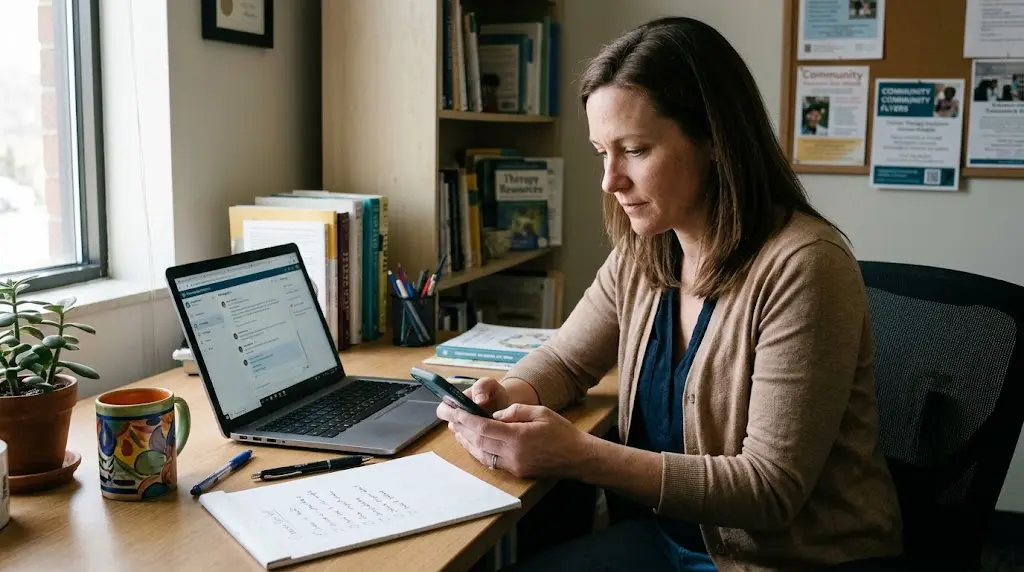
Alumni engagement is won or lost in the days around discharge. The last conversation a client has with your staff before leaving is usually about logistics: medications, appointments, a ride home. It is rarely about what their relationship with your program looks like next Tuesday, and that silence is where many alumni programs lose people before they ever join.
We have written before about running an alumni program on a lean team. This post focuses on that discharge window: what treatment centers that engage alumni well actually do during it, and why it matters for referrals and readmissions.
Alumni Engagement Starts Before Discharge
The strongest alumni programs do not wait for someone to become an alumnus. They enroll clients while they are still in care, when trust in the program is highest and staff can help with setup in person.
In practice, three things happen before a client leaves:
- The client has your branded app installed, is logged in, and has completed at least one check-in.
- The client has met the person who runs alumni engagement, even briefly.
- The client has one specific date on the calendar: an alumni meeting, an event, or a scheduled check-in.
A client who leaves with a name, an app on their phone and a date to show up has a much shorter path back to your community than one who leaves with a brochure.
Why the Discharge Window Matters
Operators often ask whether alumni programs that reduce relapse rates actually exist. No program can promise that. What the evidence does support is active, sustained contact after treatment rather than waiting for people to reach out.
A 2021 review in Alcohol Research: Current Reviews found that continuing care of longer duration, with more active efforts to keep patients engaged, may produce more consistently positive results. Trials of Recovery Management Checkups tested quarterly monitoring paired with early linkage back to treatment for people who relapsed, and participants who received checkups were more likely to return to treatment, and to return sooner, than those in usual care.
The takeaway for operators: contact should not depend on the graduate making the first move. Your program should.

What an Alumni Program Should Do After Someone Leaves
Many alumni programs are designed around events. Events are useful, but they are an output. An alumni program after discharge has four jobs.
Keep contact frequent and low-effort. Daily or weekly check-ins and push notifications keep your program present without a staff phone call to every graduate. When a response signals trouble, the alert goes to a named person.
Connect alumni to each other. SAMHSA describes peer recovery support services as nonclinical support that helps people initiate, maintain and enhance recovery. An alumni community wall, secure chat and regular meetups give graduates a peer network your center hosts.
Mark milestones where others can see them. Thirty days, ninety days, one year. Recognition inside the community gives alumni a reason to stay visible. Our post on gamified recovery experiences covers how milestones and points support ongoing participation.
Keep the door back open. When an alumnus struggles, the best outcome is that they reach out to you early. A Get Help button, survey alerts routed to a clinician, and a culture that treats readmission as continuing care rather than failure all shorten that path.
Alumni Engagement Tools for Treatment Centers: What to Look For
Group texts and private social media groups are where many programs start. They tend to break down as the alumni base grows, offer little moderation, and raise privacy questions. Our post on what a HIPAA-compliant app for treatment centers actually requires covers that last point in detail.
Purpose-built alumni engagement tools should give you check-ins and outcome surveys, a moderated community space, an event calendar with RSVP, milestone tracking, crisis resources, and a dashboard your team actually reviews. Branding matters too. When the app carries your program's name, alumni stay connected to your community rather than to a vendor. Our post on how an alumni engagement app helps treatment centers maps each of these features to a retention outcome, and our outcome tracking software guide covers what that dashboard should actually measure.
The Benefits of Alumni Programs for Rehab Centers
The clinical case for staying in touch is recovery support. The business case is referrals and readmissions, and the two reinforce each other. Alumni who feel connected to your program are often the people most likely to send a friend or family member your way, and to come back themselves if they need a higher level of care.
Diamond House Detox, with an average daily census of 64, saw alumni referrals and readmissions rise from 23% to 35.58% after launching a structured alumni platform, producing more than $90,000 in new revenue in six months without adding staff. Renaissance Ranch grew alumni referrals and readmissions from 15.4% in 2022 to 29.77% in 2024, a conservative revenue gain of more than $580,000.
Neither program got there with more events. They built consistent contact.
If your team is already stretched, our post on improving alumni engagement when staff are stretched thin walks through running this with a small team. For the readmissions side, see how to reduce readmissions without increasing staff hours.
A Discharge-to-Alumni Checklist
- Before discharge: app installed, first check-in completed, alumni lead introduced, first event booked.
- First week: welcome message from the alumni lead, invitation into the community, check-in reminders active.
- First month: first alumni event attended, first milestone recognized, any low check-in scores followed up by a named staff member.
- Ongoing: monthly review of check-in rates, event attendance, survey trends and alumni referrals.
Build Your Alumni Program Around the Discharge Moment
At Team Recovery, our team builds white-labeled alumni apps for treatment centers, with check-ins, a community wall, an event calendar, milestone celebrations, a Get Help button and outcome tracking in one HIPAA-compliant app. Alumni Development Coaching is available for programs that want help designing the discharge handoff itself. See how the build works on our custom mobile apps page.
Ready to see it with your program's branding? Book a demo.
Not ready to talk yet? Run your numbers in the Growth Calculator to estimate what stronger alumni engagement could mean for referrals and readmissions at your center.

Henna Geronimo
Reviewer
Henna is a content strategist with over 5 years of experience. She specializes in creating informed, compassionate content for addiction treatment centers, using her deep understanding of the industry to educate, engage, and support individuals seeking recovery.