
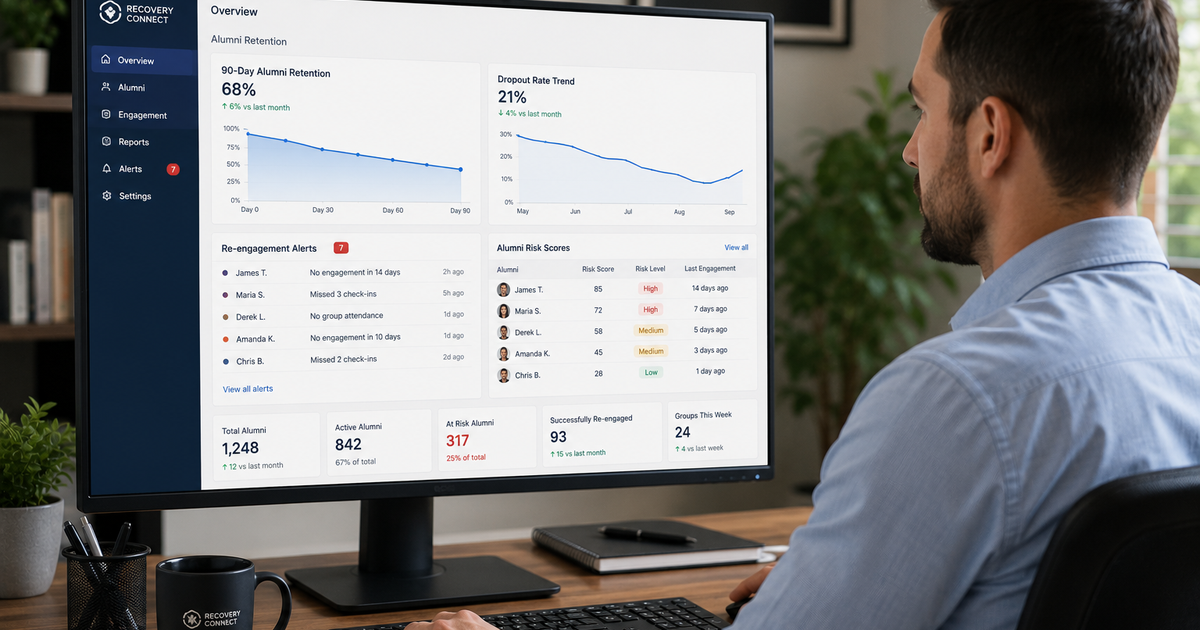
The 90 days following discharge are the most critical window in addiction recovery. Research consistently shows that alumni who stay engaged during this period have stronger long-term outcomes than those who disengage. Yet dropout during this window remains stubbornly high, which is why many programs are turning to recovery support software to strengthen retention and alumni engagement.
The programs closing that gap are not relying solely on more phone calls or larger aftercare teams. They are using smarter systems that track the right metrics, identify at-risk alumni early, and automate the engagement touchpoints that keep graduates connected when it matters most.
Here is what to track, which features drive stronger retention, and what the data reveals about where programs are losing people.
Why Recovery Support Software Must Focus on the 90-Day Window
The first 90 days post-discharge are not just clinically significant. They are operationally critical for your program as well. Alumni who remain engaged during this period are more likely to complete aftercare commitments, more likely to refer others to your program, and far less likely to require emergency readmission.
Conversely, alumni who disengage in the first 30 to 90 days represent both a clinical risk and a missed opportunity. Software for rehabs patient retention treats this window not as a passive observation period but as an active engagement campaign with defined touchpoints, measurable outcomes, and clear escalation protocols when alumni start to drift.
The Metrics Your Recovery Software Should Be Tracking
You cannot improve what you do not measure. The following metrics are the foundation of any serious addiction treatment software outcomes strategy focused on 90-day retention:
- App open rate and session frequency. How often are alumni opening your platform, and how long are they staying? Declining open rates in weeks two through six are a leading indicator of dropout risk.
- Check-in completion rate. What percentage of scheduled check-ins are alumni completing? Missed check-ins are one of the earliest and most reliable signals of disengagement.
- Mood trend data. Are alumni self-reporting worsening mood over time? Longitudinal mood tracking allows your team to identify emotional deterioration before it becomes a crisis.
- Event attendance rate. Are alumni showing up to virtual or in-person alumni events? Attendance is one of the strongest behavioral indicators of community connection.
- Days since last activity. Every alumni platform should surface a simple metric showing how long each graduate has been inactive. Thirty days of silence should trigger an automatic outreach protocol.
- Alumni referral activity. Alumni who are actively referring others are among the most engaged members of your community. Tracking this alongside retention data reveals the connection between advocacy and sustained recovery.
Features That Drive 90-Day Retention
Tracking metrics is only valuable if your platform gives you the tools to act on what you see. The behavioral health software solutions that consistently improve 90-day retention share a common set of features:
- Automated re-engagement workflows. When an alumnus goes quiet for a defined period, the platform automatically triggers a sequence of outreach attempts before a human escalation is needed.
- Push notification cadences. Personalized, milestone-driven notifications keep your program present in the alumni's daily life without requiring manual staff effort.
- Peer connection features. Alumni who form peer relationships within your community through the app are significantly more likely to remain engaged. Group chats, peer shoutouts, and community forums all support this.
- Gamified milestones. In recovery support software, sobriety streaks, badge achievements, and community recognition features give alumni a positive reason to open the app every day.
- Telehealth access. Frictionless access to a counselor or peer support specialist from within the app removes the barriers that cause alumni to skip sessions when life gets difficult.
Using Recovery Support Software to Build a Culture of Proactive Care
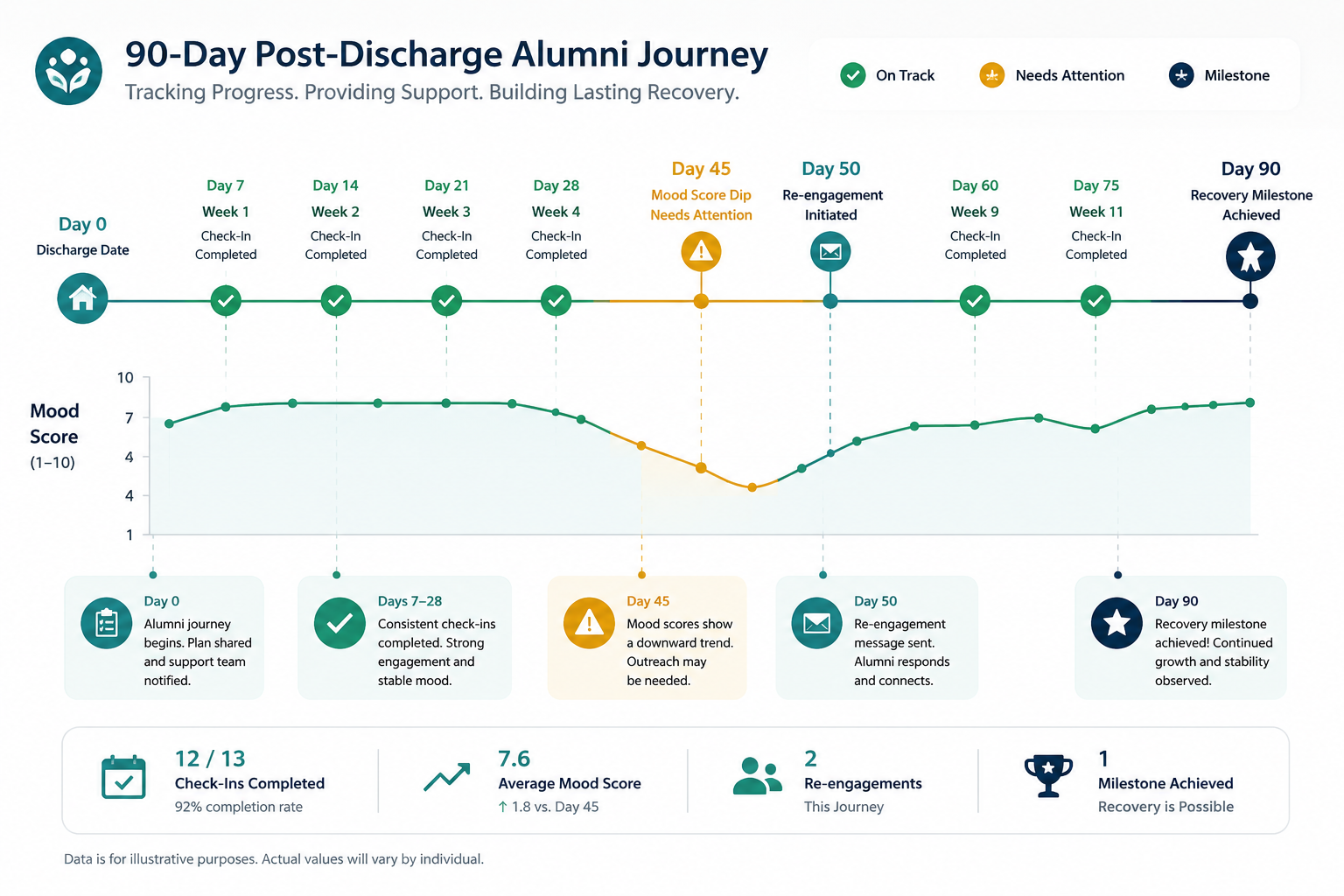
The programs that achieve the strongest 90-day retention rates are not just reactive. They are proactive. They use their alumni engagement software treatment centers to identify patterns across their entire alumni population and build engagement strategies around what the data shows.
For example, if your data shows that alumni consistently disengage around week four post-discharge, that is a signal to build a specific, high-intensity engagement touchpoint at that moment. A personal outreach call, a special milestone recognition, a virtual alumni event. The platform surfaces the pattern. Your team designs the response.
This is how recovery support software shifts the culture of a treatment center from reactive case management to proactive community care. It is also how programs that invest in the right custom mobile apps behavioral health begin to see the 90-day behavioral health software solutions dropout numbers that seemed fixed start to move.
Connecting Retention Data to Your Broader Program Strategy
Ninety-day retention is not just an outcome metric. It is a leading indicator of referral activity, readmission rates, accreditation performance, and payer outcomes. Programs with strong retention data are better positioned to negotiate with insurers, attract high-quality clinical staff, and build the reputation that drives organic census growth.
The right alumni referral tracking rehab platform connects retention data to referral behavior, giving your team a clearer picture of how alumni support influences long-term growth. That visibility shifts retention from a problem you react to into one you can actively manage.
Ninety-day dropout is not inevitable. With the right recovery support software and measurable engagement data, it becomes a challenge your team can predict, address, and reduce.
Team Recovery builds alumni platforms that surface at-risk graduates early, automate re-engagement, and help programs strengthen retention during the most critical window in recovery. Use our Growth Calculator to see how improved retention and alumni engagement can translate into measurable admissions and revenue growth.

Henna Geronimo
Reviewer
Henna is a content strategist with over 5 years of experience. She specializes in creating informed, compassionate content for addiction treatment centers, using her deep understanding of the industry to educate, engage, and support individuals seeking recovery.
.png)

.webp)